
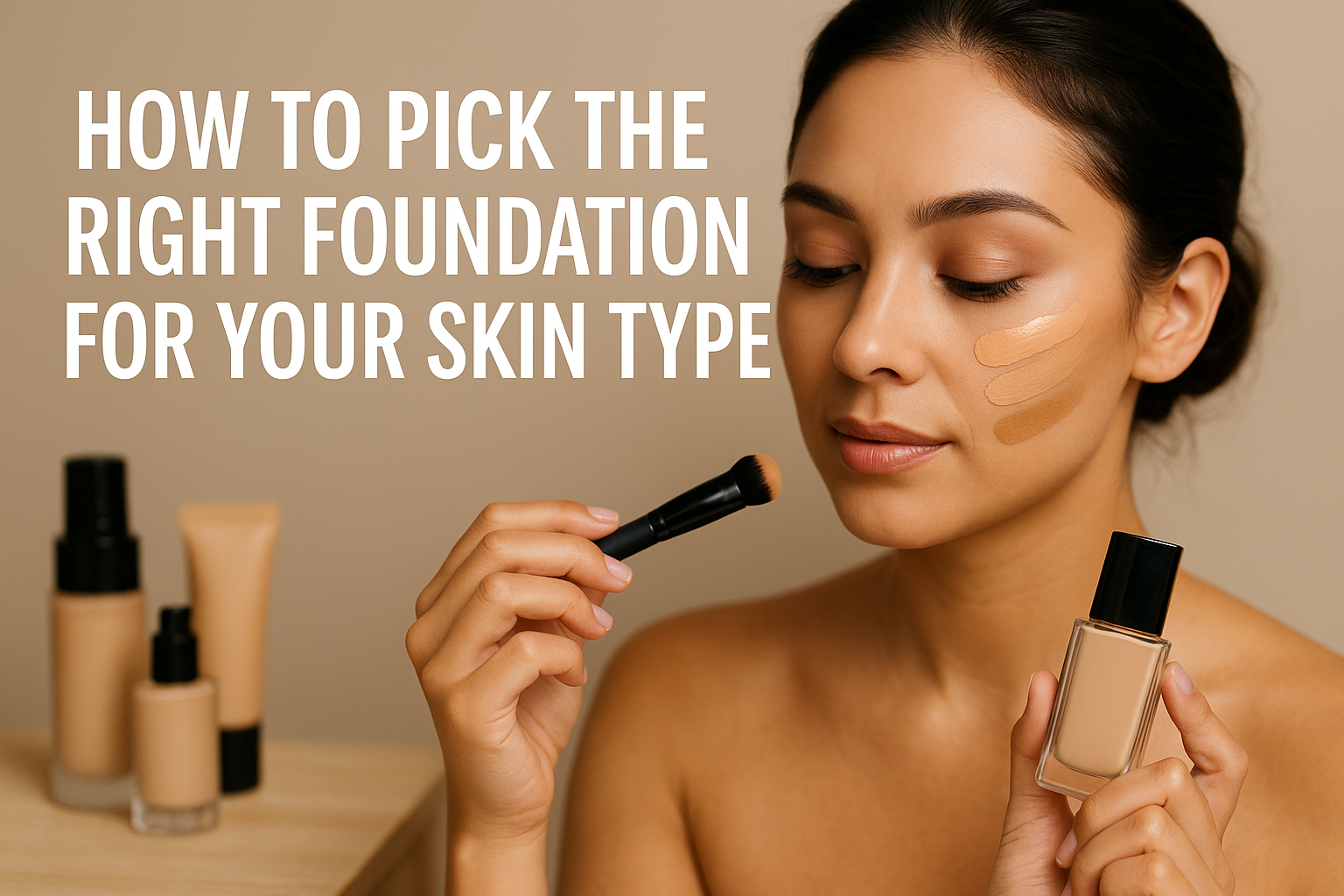
Choosing the right foundation can be overwhelming—there are so many formulas, finishes, and shades. But when you match the product to your skin type, you unlock flawless coverage and a natural glow.
Here’s your complete guide to choosing the perfect foundation for your skin type, whether you’re oily, dry, combination, or sensitive.
1. Know Your Skin Type First
Before buying any foundation, determine your skin type:
- Oily skin: Shiny, especially in the T-zone; prone to breakouts
- Dry skin: Flaky, tight, or rough texture
- Combination skin: Oily in the T-zone, dry elsewhere
- Sensitive skin: Redness, irritation, or reactivity to products
- Normal skin: Balanced, not too oily or dry
Understanding your skin’s behavior helps you choose the right formula.
2. Best Foundations for Oily Skin
What to look for:
- Oil-free or mattifying formulas
- Long-wear, shine-control labels
- Powder, stick, or matte liquid textures
Top ingredients:
- Salicylic acid (for acne-prone skin)
- Clay or charcoal (for oil absorption)
Pro tip: Always use a primer and setting powder for longer wear.
3. Best Foundations for Dry Skin
What to look for:
- Hydrating or dewy finishes
- Cream, liquid, or cushion foundations
- Formulas with added skincare benefits
Top ingredients:
- Hyaluronic acid
- Glycerin
- Squalane or ceramides
Pro tip: Exfoliate and moisturize before applying to prevent patchiness.
4. Best Foundations for Combination Skin
What to look for:
- Balancing or satin finishes
- Lightweight liquid or serum foundations
- Medium coverage that can be built up in certain areas
Pro tip: Use mattifying products on the T-zone and hydrating ones on drier areas.
5. Best Foundations for Sensitive Skin
What to look for:
- Fragrance-free and non-comedogenic formulas
- Hypoallergenic labels
- Mineral or dermatologically tested products
Avoid:
- Alcohol-based or heavily perfumed foundations
- Thick, heavy creams that can clog pores
Pro tip: Patch test every new product before applying to your whole face.
6. How to Choose the Right Shade

- Test on your jawline (not your wrist!)
- Swatch 2–3 shades and check in natural light
- Match the undertone:
- Warm = golden/yellow
- Cool = pink/blue
- Neutral = a mix of both
If you’re between shades, go slightly lighter—you can always warm it up with bronzer.
7. Choose the Finish You Want
- Matte: Great for oily skin or long wear
- Dewy: Ideal for dry skin and a glowing look
- Natural/Satin: Works for most skin types, flexible and buildable
8. Consider the Coverage You Need
- Sheer: Evens out tone while showing skin texture
- Medium: Covers redness and uneven tone without looking cakey
- Full: Great for events or high coverage lovers, but can feel heavier
Everyday wear? Most people prefer light to medium coverage.
9. Don’t Forget Your Tools
Application matters as much as product choice:
- Brushes: Provide fuller coverage and precise application
- Sponges: Deliver a natural, blended look
- Fingers: Best for sheer formulas and minimal makeup days
Always clean your tools to avoid buildup and breakouts.
10. Adapt as Your Skin Changes
Skin changes with age, weather, hormones, and lifestyle. Reassess your foundation every 6–12 months to make sure it still meets your needs.
Flawless Skin Starts With the Right Base
The perfect foundation does more than cover—it enhances. By understanding your skin type and choosing the right formula, shade, and finish, you’ll find a product that feels like skin, but better.
It’s not about hiding imperfections—it’s about letting your natural beauty shine.
You may also like this article…